
 English
 Español

Important Safety Note: A malfunction of the brake pump motor (often part of the ABS or Hydraulic Control Unit/HCU) directly affects the vehicle’s anti-lock braking and stability control functions. If you suspect any fault in the braking system, you should immediately have it checked by a professional technician. Never drive a vehicle with a suspected braking system defect for an extended period.
1. Warning Lights on the Dashboard
When the brake pump motor or its associated electronic control unit fails, the vehicle’s computer will quickly log a fault code and illuminate the relevant warning lights.
- ABS Warning Light: This is the primary indicator of a brake pump motor failure. Its illumination means the Anti-lock Braking System has stopped working. In an emergency stop, the wheels may lock up, leading to loss of control.
- Traction Control Light (TCS) / Electronic Stability Control Light (ESP/ESC): Since these systems rely on the ABS unit to individually control the braking pressure of each wheel, a fault in the ABS pump motor often causes these advanced safety features to be simultaneously disabled.
- Brake Warning Light (Red): In certain high-end or highly integrated braking systems, insufficient pressure in the pump motor or accumulator (energy storage unit) may trigger the red brake warning light, which usually accompanies more severe braking issues.
2. Unusual Noise and Continuous Running
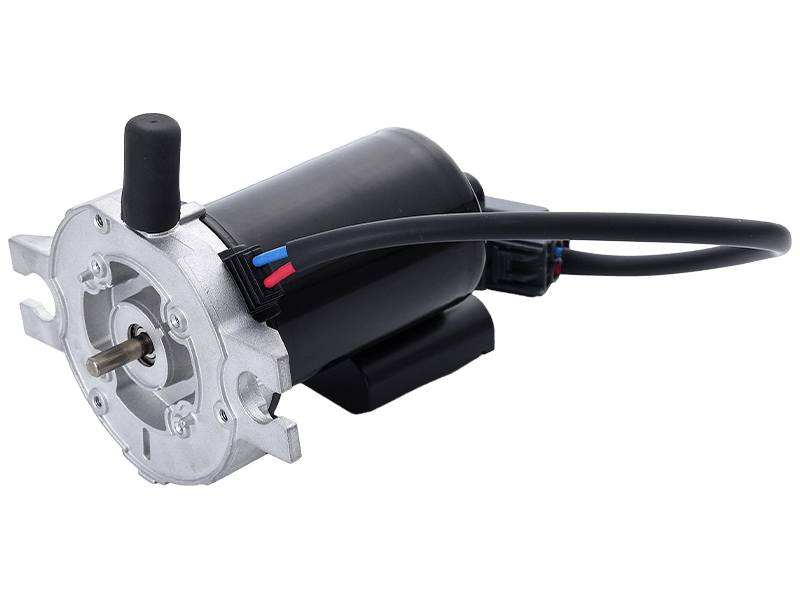
The brake pump motor is an electric motor whose purpose is to provide the necessary hydraulic pressure for the ABS system. Under normal conditions, you should only hear it run briefly in the following two situations:
- Startup Self-Check: When the vehicle key is turned to “ON” or the engine is started, the system performs a brief self-check (usually a few seconds).
- ABS Intervention: When the ABS system activates during hard braking that causes wheel slippage.
Abnormal Performance During Failure:
| Failure Symptom | Potential Cause | Diagnostic Significance |
|---|---|---|
| Motor runs constantly | Accumulator pressure leak or internal valve failure; the pump motor is continuously attempting to compensate for pressure loss. | This is a critical sign that the pump motor or the entire HCU assembly is failing. |
| Running noise is excessively loud or grinding | Motor bearing wear, internal component damage, or low/contaminated hydraulic fluid. | Indicates a mechanical problem within the motor’s structure, which could lead to seizing or burnout. |
| Frequent, cyclical buzzing sound | In certain system types (like electro-hydraulic brake systems), if the pressure sensor fails or there is a minor internal leak, the pump may attempt to pressurize at fixed intervals (e.g., every 20-40 seconds). | Suggests the system cannot maintain constant pressure and needs replacement. |
3. Abnormal Brake Pedal Feedback
A change in the pedal feel is one of the most immediate symptoms a driver can perceive.
- Hard Brake Pedal (High Position): If the brake pump motor cannot provide sufficient boost pressure (especially in systems using electro-hydraulic assist), you will feel the pedal become very hard, requiring much more force to brake, leading to a significantly increased stopping distance.
- Abnormal Pulsation or Vibration: If you feel the characteristic ABS working pulsation or vibration under light or normal braking on a dry, flat road (when it shouldn’t be active), it indicates the ABS system is incorrectly activating. This is often caused by a fault in the pump motor or control valve body.
- Pedal “Sinking” or Spongy Feel: While this is more common for master cylinder or fluid leak issues, in certain complex ABS failures, the pedal may feel vague with excessive travel due to incorrect hydraulic circuit regulation.
4. How to Confirm Replacement is Needed
After ruling out simple external factors, professional tools are required to determine if the brake pump motor needs replacement.
4.1. Use a Professional Diagnostic Tool (OBD-II Scanner)
This is the primary step in determining the cause of the fault:
- Read ABS-Specific Codes: You must use a professional-grade scanner capable of accessing the Brake Control Module (ABS Module), not a general engine code reader.
- Fault Code Pinpointing: Many codes will directly point to the motor circuit or performance, for example:
- $C0110$ – ABS Pump Motor Circuit Failure
- $C0020$ – Pump Motor Performance Fault
- Actuator Test: Professional diagnostic tools can force the ABS pump motor to activate. If the motor fails to start or starts with an abnormal sound upon command, it confirms a problem with the motor body or its drive circuit.
4.2. Check External Power and Wiring
Before replacing an expensive pump assembly, external power supply issues must be ruled out:
- Check Fuses and Relays: Locate the dedicated fuse and relay for the ABS pump motor. If the fuse is blown, the motor may have an internal short circuit; if the relay is faulty, the motor may not receive power.
- Wiring Integrity Check: Inspect the wiring harness and connectors from the fuse box to the ABS pump plug for signs of corrosion, chafing, or looseness. Poor connections can lead to insufficient voltage, preventing the motor from operating correctly.
- Voltage and Current Test: A technician will measure the voltage at the pump motor’s plug. If the power supply is sufficient but the motor doesn’t work, or if the motor draws excessive current when operating (indicating internal seizing or a short circuit), then the motor needs replacement.
 +0086-0574-88427838