
 English
 Español

I. Definition and Significance of the Window Lifter
1. Conceptual Definition
The Window Lifter, also known as the Window Regulator or Glass Lifter, is an indispensable electromechanical actuator located inside the car door. Its primary function is to precisely control the car door glass’s ascending and descending movement along vertical guides, while ensuring that the glass can be reliably self-locked in any desired position when the command to stop is issued, preventing it from slipping down by itself.
2. Status in Modern Vehicles
In modern automobiles, the electric window lifter has largely replaced the manual crank, becoming a standard configuration. It not only offers convenient operation but, more importantly, enhances the car’s safety, comfort, and intelligence level. This includes features like remote control window opening for ventilation, integration with the anti-theft system, and the crucial anti-pinch function.
II. Detailed Comparison of Drive Methods
Window lifters are primarily categorized into two types—manual and electric—which differ significantly in structural complexity, cost, and user experience.
| Feature Comparison | Electric Regulator | Manual Regulator |
|---|---|---|
| Power Source | DC Drive Motor | Hand Crank |
| Control Method | Electronic switch or Vehicle ECU signal | Purely mechanical force transmission |
| Core Advantages | Convenient, enables one-touch operation, anti-pinch protection, remote control | Simple structure, relatively low failure rate, very low cost |
| Typical Application | All modern passenger vehicles (Sedans, SUVs, etc.) | Older models, some low-spec commercial vehicles |
| Safety | High (equipped with anti-pinch feature) | Low (lacks anti-pinch feature) |
III. Working Principle of the Electric Window Regulator
The electric regulator converts electrical energy into mechanical energy, utilizing precise reduction and transmission systems to achieve smooth glass movement.
1. Electrical Control and Self-Locking Mechanism
- Signal and Current Flow: When the user presses the lifting switch, the circuit board or Electronic Control Unit (ECU) receives the signal and controls a relay or transistor to direct current to the DC motor. The direction of the current (forward or reverse) determines whether the motor rotates forward (ascent) or backward (descent).
- Worm Gear Self-Locking: The drive motor typically integrates a worm and worm gear reducer. This mechanism serves not only to reduce speed and increase torque but, most importantly, provides unidirectional transmission (self-locking). This means the worm can drive the worm wheel, but torque applied in reverse from the worm wheel cannot drive the worm (effectively locking it). This ensures the glass reliably stays in any position when the motor stops (power is cut), preventing gravity-induced slippage.
2. Conversion of the Mechanical Transmission System
The motor’s high-speed rotation must be converted into the glass’s slow, high-torque linear motion via specific mechanical structures.
- Cable-Pulley Type: This is the most common and compact type today. The motor drives a spool which winds or unwinds a high-strength steel cable or plastic wire. The cable passes through a system of pulleys and guides, connecting to and pulling the glass carrier along the vertical guide rail. This design is suitable for compact vehicles with limited interior door space.
- Scissor/Arm Type: This is an older but very robust structure. The motor drives a screw rod or a sector gear that pushes the two crossing arms (resembling scissors or an “X”). The ends of the arms are connected to the glass carrier. This structure offers smooth movement and high load capacity but takes up more space.
IV. In-Depth Analysis of Core Components
A complete electric window lifting system is composed of the following key components:
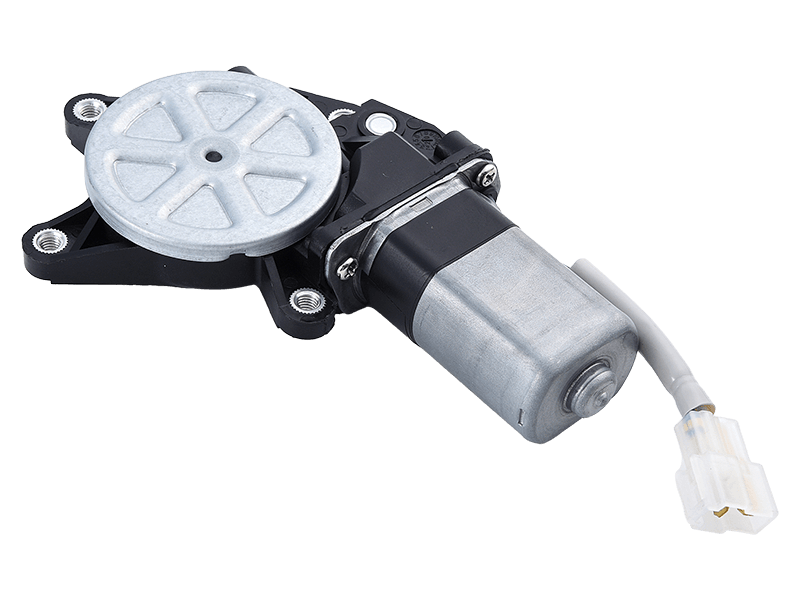
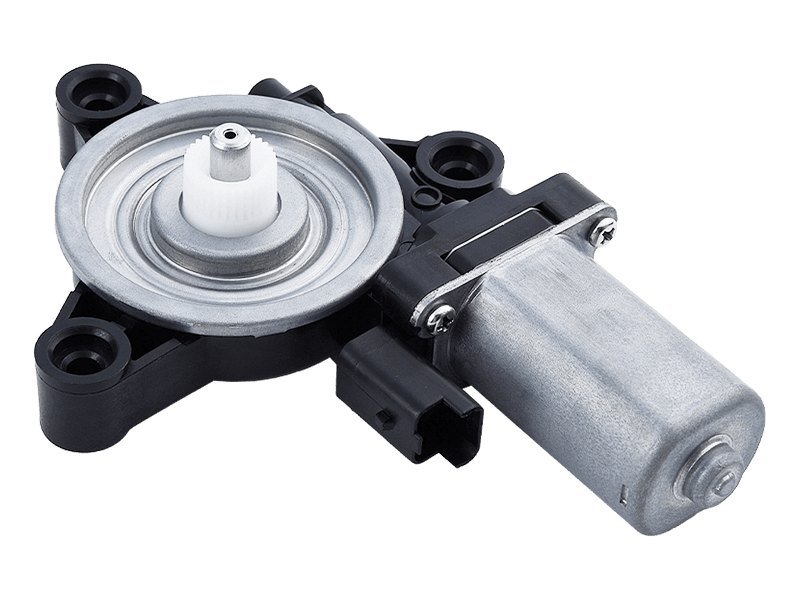
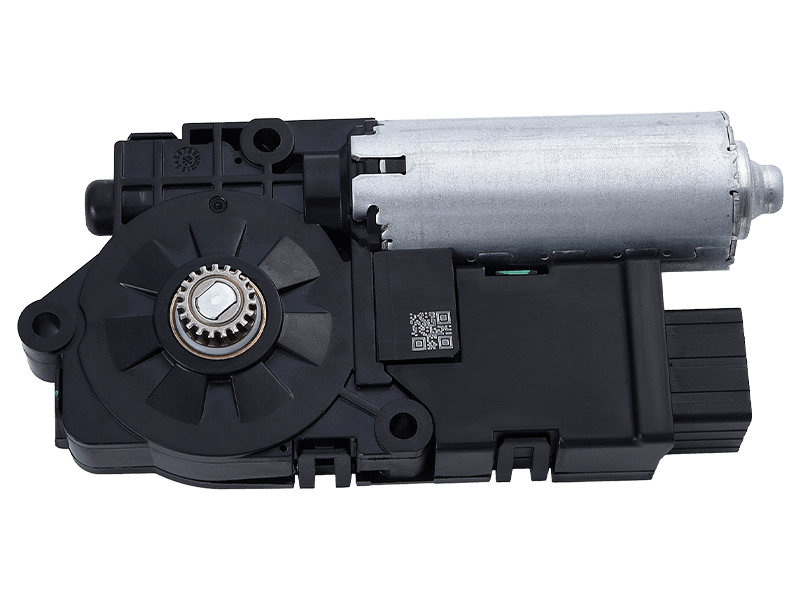
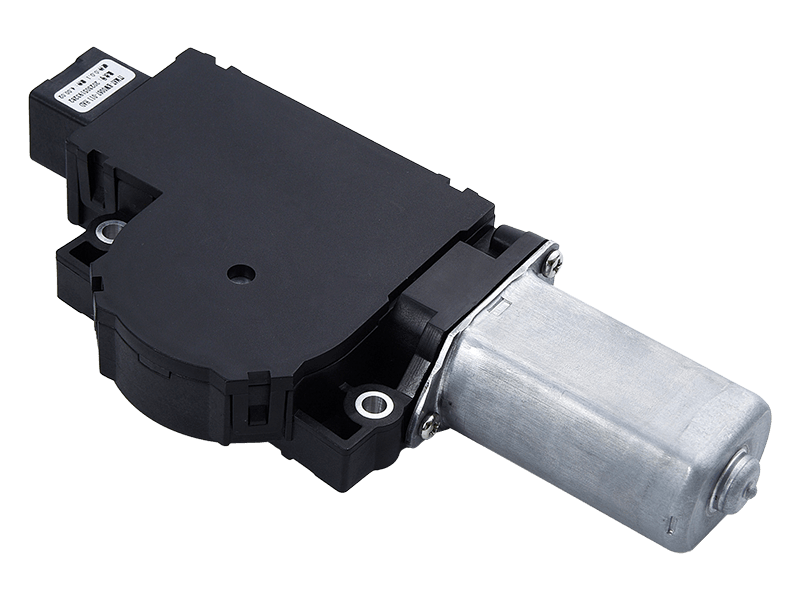
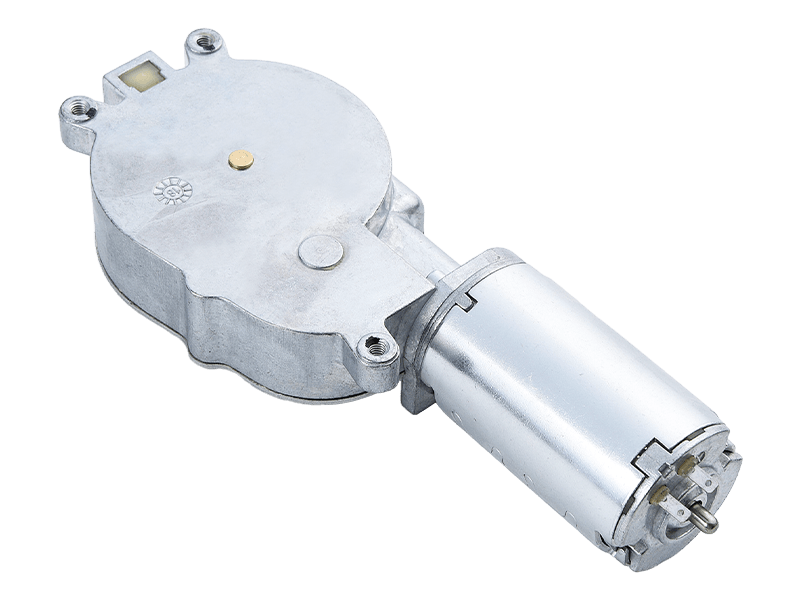
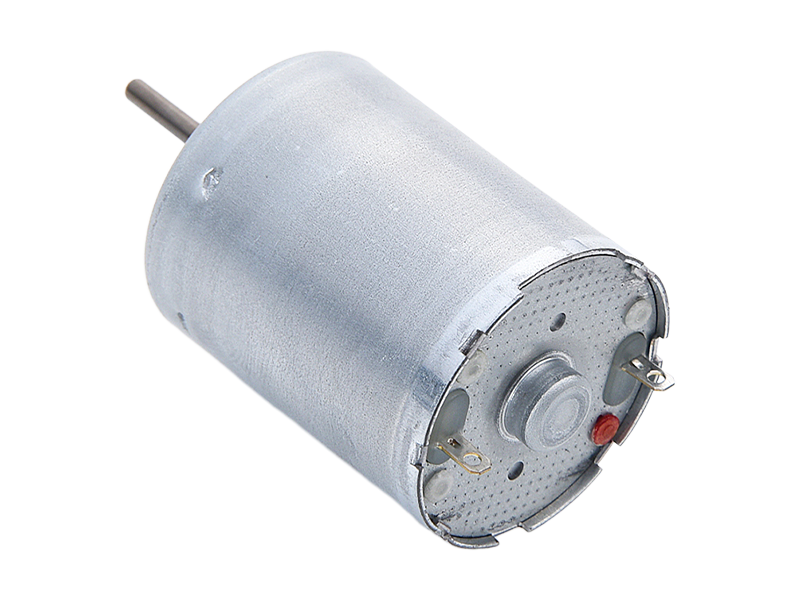
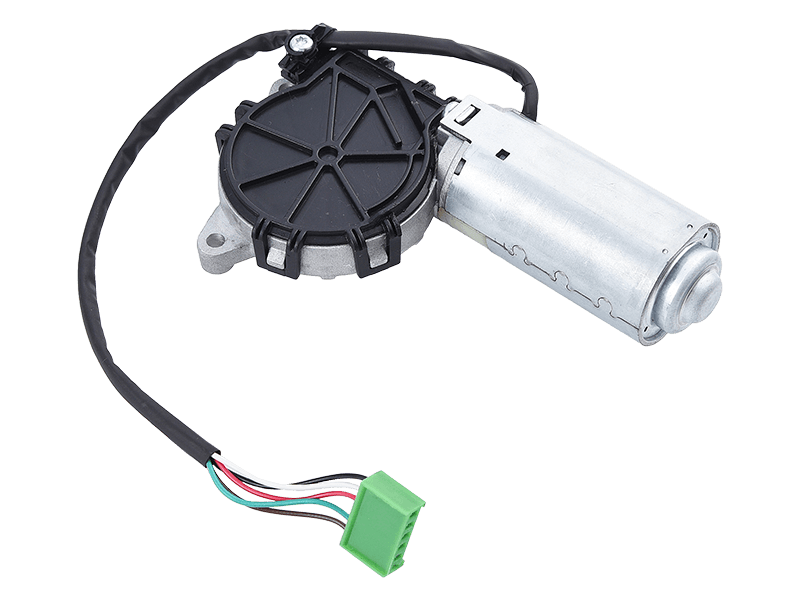
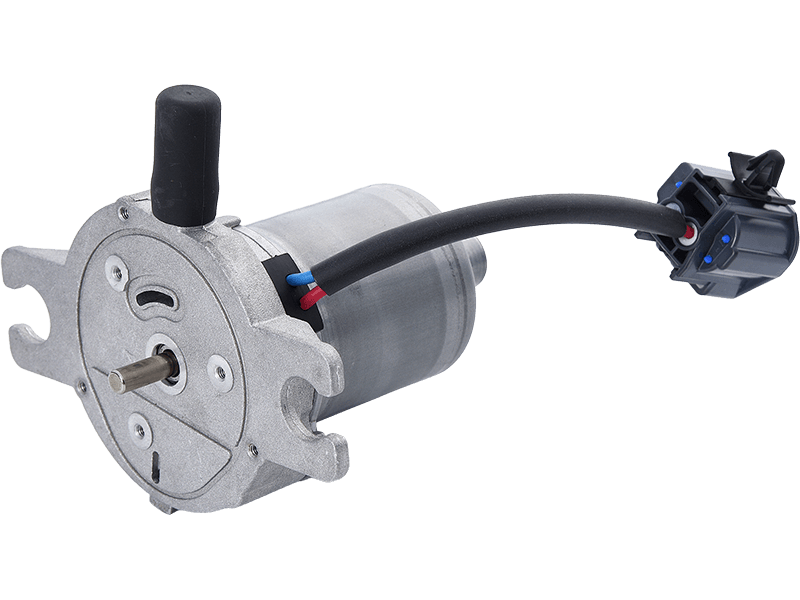
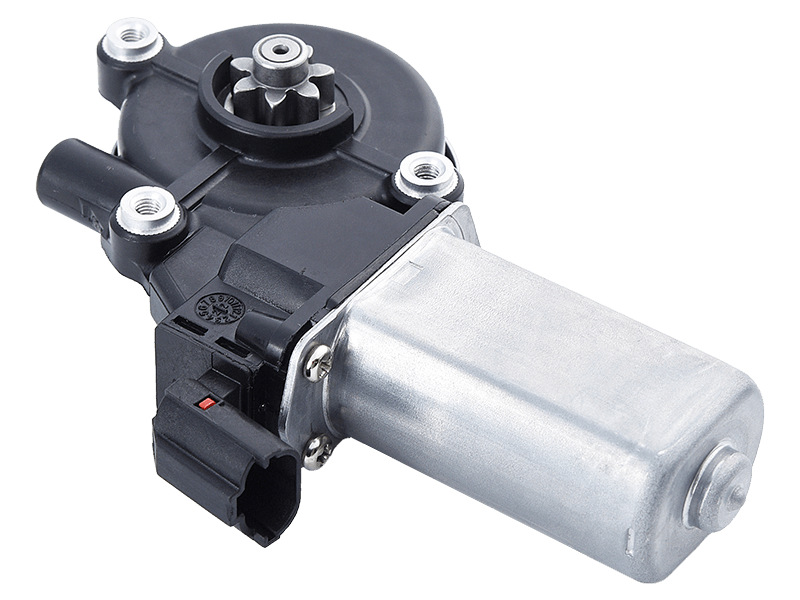
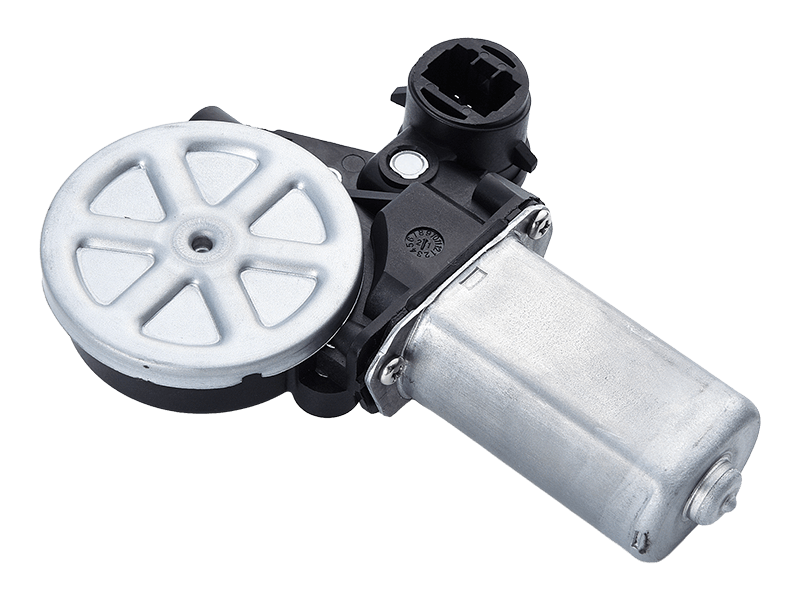
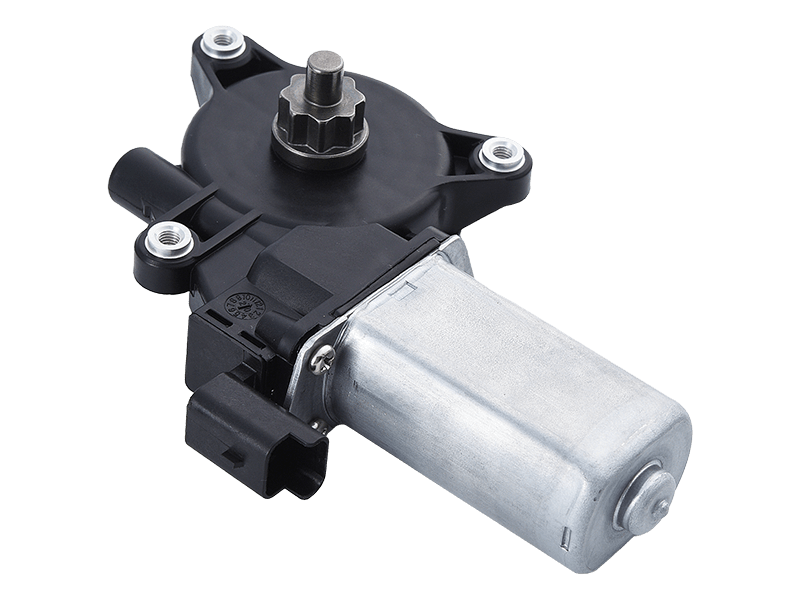
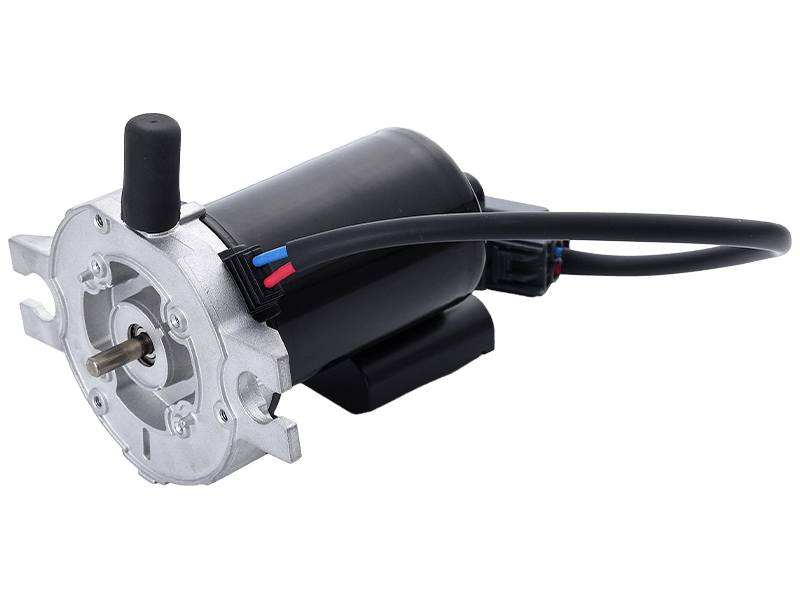
1. Power and Drive Core: DC Motor
- High Torque Requirement: The motor needs to overcome the friction resistance from the glass and sealing strips, requiring a high torque output capacity.
- Integrated Gearbox: As mentioned, the integrated worm and worm gear reduction box is crucial for achieving self-locking and torque amplification.
- Integrated Sensors (Smart Systems): In advanced systems, Hall sensors or encoders are installed within the motor to precisely measure the motor’s revolutions, enabling accurate glass position memory and one-touch functionality.
2. Transmission and Support Structure: Guide Rail, Carrier, and Cable/Arms
- Guide Rail: Typically made of metal or rigid plastic, it is mounted on the door frame. It ensures the glass carrier moves along a precise vertical or slightly inclined path, preventing the glass from shaking or jamming.
- Glass Carrier: A U-shaped or C-shaped fixture directly secured to the bottom of the glass. It serves as the interface between the transmission mechanism and the glass. It must withstand all forces exerted during lifting and lowering.
- Cable/Steel Wire: In the cable-pulley type, this is the medium that transmits power. Its quality directly affects the smoothness of operation and service life, requiring high strength and fatigue resistance.
3. Control and Safety Modules: Switch and ECU
- Master/Slave Switches: The driver’s side features a master switch to control all windows, while passenger sides have slave switches for their respective windows. High-quality switches must have good conductivity and durability.
- Anti-Pinch Protection: This is a critical safety feature of modern regulators. It detects an obstruction by monitoring the motor current (the current surges when resistance is encountered) or by Hall sensors (detecting a sudden drop in motor speed). Once triggered, the system instantly reverses the motor within milliseconds, causing the glass to descend slightly to protect occupants or objects.
 +0086-0574-88427838